Share Norman Nicolás Huff's obituary with others.
Invite friends and family to read the obituary and add memories.
Stay updated
We'll notify you when service details or new memories are added.
You're now following this obituary
We'll email you when there are updates.
Select your format and elements to print

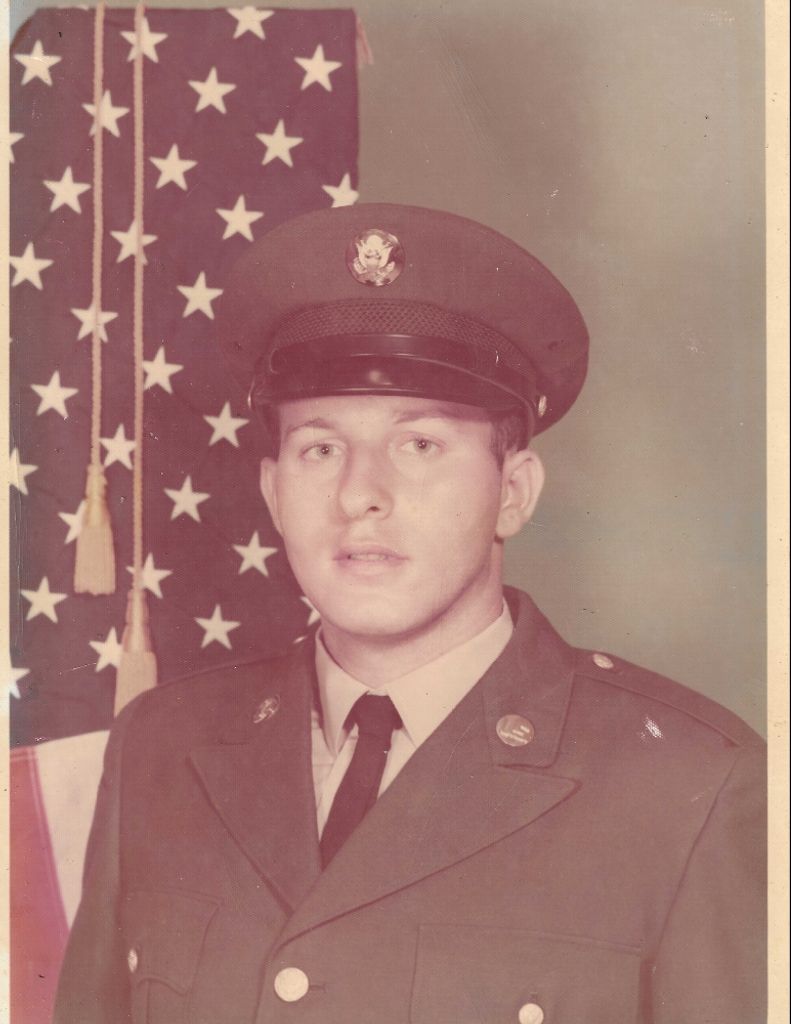


Norman Nicolás Huff
December 6, 1950 — May 17, 2026
Norman Nicolás Huff passed peacefully into eternal life at sunrise on Sunday, May 17, 2026, after a life marked by exile, suffering, endurance, faith, and deep familial love.
In the final days of his life, his family was granted the grace of remaining near him long enough to show him clearly how deeply he was loved. Those who accompanied him during his final earthly journey came away with a renewed understanding not only of Norman himself, but also of the hidden suffering endured by so many individuals who live with severe mental illness.
Yet while Norman's life was touched by tragedy, it was also filled with beauty, dignity, humor, intelligence, kindness, and meaning. He touched many lives gently and permanently.
Norman Nicolás Huff was born on December 6, 1950, in Santa Clara, Cuba, then part of the historic province of Las Villas, one of the six traditional provinces into which the Republic of Cuba was once divided before the revolutionary restructuring of the island's political geography.
He was the son of Norman Harlan Huff (1917–1954) and Josefa Prado Pérez (1914–2011).
On his father's side, Norman descended from German-American agricultural settlers believed to have originated in the Minnesota–St. Paul region of the United States. During the early decades of the twentieth century, his paternal grandparents relocated to Cuba, where they established citrus groves and agricultural enterprises during the years when farmland became available to foreign settlers and investors in the young Cuban Republic. Those agricultural holdings later passed to their son, Norman Harlan Huff.
On his mother's side, Norman descended from long-established Cuban families of Spanish ancestry whose roots on the island extended back several generations.
Norman and his sister Maria Elena spent their childhood at La Finca Palo Bonito, located in the geographic region known as the Savannas of Manacas in central Cuba. There, amid open countryside, royal palms, livestock, dusty roads, and citrus groves, they experienced a world that would largely disappear after the Cuban Revolution — a rural Cuba shaped by Catholic traditions, agricultural rhythms, extended family life, and the cultural blending that characterized the island before exile scattered so many families across the world.
As a child, Norman attended the Marist Brothers' Catholic school in Santa Clara, where he received the foundations of the Catholic faith that would remain with him throughout his life.
The defining event of Norman's childhood was exile.
On the afternoon of February 13, 1963, Norman, then eleven years old, departed Cuba with his mother and sister aboard the U.S.S. Santo Cerro , one of the vessels transporting Cuban refugees to the United States during the years following the Cuban Revolution and the Bay of Pigs prisoner exchange agreements.
Like so many departing Cuban families of that era, they were permitted to bring very little with them. Their departure from Havana Harbor came only months after the Cuban Missile Crisis of October 1962, when the world had stood at the edge of nuclear confrontation and the United States had imposed a naval quarantine around Cuba.
Maria Elena later recalled that after boarding the vessel in the late afternoon, many of the women and children went below deck. Norman, however, remained above, watching Havana Harbor disappear into the distance. He would later remember what he believed was a destroyer accompanying or following the S.S. Santo Cerro as it departed Cuban waters — an image that remained fixed in his memory for the rest of his life.
By the following day, February 14, 1963, the family arrived at Port Everglades, Florida, where they were processed among hundreds of Cuban refugees and formally admitted into the United States.
Like many Cuban exile families of that generation, they arrived carrying little materially, but much spiritually: memory, faith, language, culture, grief, hope, and the determination to rebuild their lives in freedom.
The family eventually settled in Miami near Corpus Christi Catholic Church, where the Catholic Church played a central role in assisting newly arrived Cuban refugees. Throughout the upheaval of exile and resettlement, Norman's family remained deeply committed to their Catholic faith.
Norman first attended parochial school in Miami before continuing his education at Archbishop Curley-Notre Dame High School, then known as Archbishop Curley High School. His attendance there was made possible in part through the generosity and support of clergy connected to Corpus Christi Church who were committed to preserving Catholic education among newly arrived Cuban refugee families.
He graduated from Archbishop Curley High School around 1969 and later attended Biscayne College, now part of St. Thomas University. He continued his studies at Miami Dade College from 1970 to 1983, where he ultimately earned an associate degree.
In the mid-1970s, Norman enlisted in the United States Army and was honorably discharged in 1975. Although his military service was relatively brief, he maintained throughout his life a profound admiration for military traditions, patriotic ceremonies, and the music of national anthems, especially that of his beloved Cuba.
As a young man, Norman developed schizophrenia, a devastating illness that altered the course of his life and prevented him from fully realizing many of the intellectual and professional aspirations for which he was gifted. Yet those who knew Norman — whether in everyday life or during his years within institutional care — remembered him not for his illness, but for his humanity.
To many at the Northeast Florida State Hospital in Macclenny, he became affectionately known as "Mr. Huff." Though his life carried hardships, it also carried dignity, meaning, and grace.
Norman possessed remarkable physical strength, an easygoing nature, and a hearty appetite. He loved praying the rosary and remained deeply connected to his Catholic faith throughout his life. He was intellectually curious, widely read, observant, and often surprisingly humorous. While he could occasionally be strong-willed and quick-tempered, his anger was usually brief and quickly replaced by warmth and good humor.
He also never lost his affection for Cuba. Throughout his life he enjoyed hearing the national anthems of many countries, though none moved him more deeply than that of the land of his birth.
Through all the changes and hardships of life, Norman remained profoundly devoted to his mother, Josefa Prado Pérez, with whom he lived for much of his adult life. Their bond was exceptionally close. Just as Norman was a devoted son, Josefa was an extraordinarily devoted mother whose love, protection, and sacrifice sustained him through many difficult years.
Norman's life profoundly influenced his family in lasting ways. His presence inspired the purchase of the family home in Gainesville's Grove Street neighborhood and indirectly contributed to neighborhood preservation efforts and the creation of Dreamers Garden.
Above all, Norman Nicolás Huff was unique: gentle, intelligent, faithful, sensitive, thoughtful, and deeply loved.
He is survived by his sister, Maria Elena Huff Edwards; his brother-in-law, David J. Edwards; numerous cousins in South Florida and Cuba; extended family members; caregivers; and friends who cherished him throughout his life.
His family finds comfort in the Christian promise of the resurrection and believes that Norman Nicolás Huff now rests in the peace of Christ, reunited with the angels, saints, and beloved family members who preceded him in death — free at last from suffering, and finally home.
Service Schedule
Past Services
Graveside Service
Thursday, May 28, 2026
11:00 am - 12:30 pm
Countryside Christian Cemetery
Livestream
Guestbook
This site is protected by reCAPTCHA and the
Google Privacy Policy and Terms of Service apply.
Service map data © OpenStreetMap contributors